


From Narrative to Execution
The conversation has shifted. It's no longer about where the market is going, but how fast banks can execute against it.
Growth Is Real but More Complex
Saudi Arabia continues to show strong economic momentum, driven by diversification, giga-projects, and expanding non-oil sectors such as tourism, logistics, and services.
For banks, this translates into sustained demand across key areas:
- Corporate lending linked to large-scale national projects
- SME financing as new sectors expand
- Mortgage growth, supported by government-backed housing initiatives
But growth is becoming more complex to capture.
Margins are under pressure, competition is increasing, and clients expect faster, more flexible financing. Banks are no longer competing only on balance sheet strength — but on speed, experience, and execution capability.
The differentiator now is execution.
Digital Transformation: From Capability to Differentiation
Most banks in the Kingdom have already invested in digital channels. That is no longer a differentiator.
The new gap is in how well these capabilities are executed and integrated. Key priorities have shifted toward:
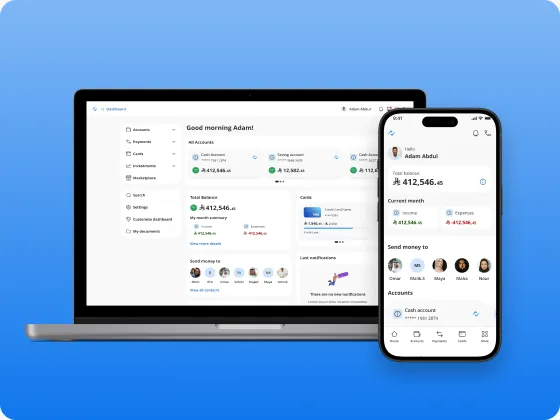
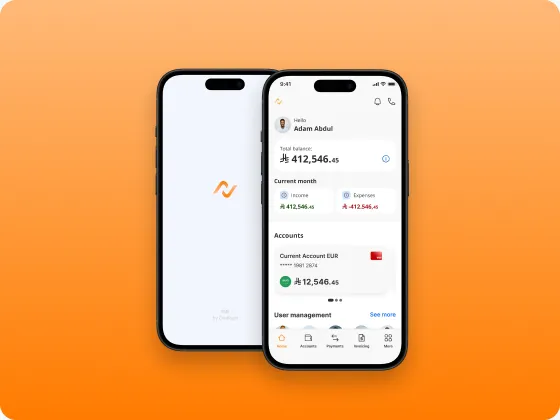
- End-to-end digital journeys, not fragmented experiences
- Real-time decisioning in lending and onboarding
- Seamless omnichannel experiences across mobile, web, and branch
The challenge is not launching digital features — it's connecting them across legacy systems, ensuring consistency, and scaling them efficiently.
This is where many institutions face friction: digital front-ends are advancing faster than core systems and operational processes.
Regulation and Compliance as Core Infrastructure
Regulatory frameworks in Saudi Arabia, led by SAMA, continue to evolve in parallel with market growth.
Compliance is no longer a downstream requirement — it is becoming embedded into product design and operational models.
Areas such as:
- Consumer protection
- Responsible lending
- Data governance and reporting
are now central to how banks build and scale digital services.
Institutions that treat compliance as part of their infrastructure — not as a constraint — are better positioned to scale sustainably.
The Rise of Platform Banking and Embedded Finance
Another structural shift is the move toward platform-based models. Banks are increasingly:
- Embedding financial services into third-party ecosystems
- Partnering with fintechs to accelerate time-to-market
- Exposing capabilities via APIs to support new distribution models
This is particularly relevant in areas like payments, lending, and BNPL, where customer acquisition is happening outside traditional banking channels.
The implication is clear: distribution is fragmenting, and banks must adapt to remain relevant in the customer journey.
Global Integration: Opportunity with Expectations
Saudi Arabia's financial sector is attracting growing international attention — from investors, technology providers, and global financial institutions. This creates opportunities for cross-border expansion, strategic partnerships, and technology transfer and innovation.
But it also raises the bar. Global integration brings increased expectations around operational efficiency, risk management standards, and technology scalability.
Saudi banks are not just competing locally — they are positioning themselves within a global financial ecosystem.
Key takeaways
What Will Define the Next Phase
The next phase of banking in Saudi Arabia will not be defined by strategy or vision — but by execution. Winning institutions will be those that can:
- Connect digital channels with core banking systems
- Deliver faster, data-driven lending decisions
- Scale operations without increasing complexity
- Align innovation with regulatory requirements
Conclusion
Saudi Arabia's banking sector has entered a new stage. Growth is strong. Digital capabilities are in place. Regulation is evolving.
The differentiator now is execution.
For financial institutions, the focus is no longer on transformation as a concept — but on delivering tangible outcomes: faster processes, better customer experiences, and scalable, compliant growth.